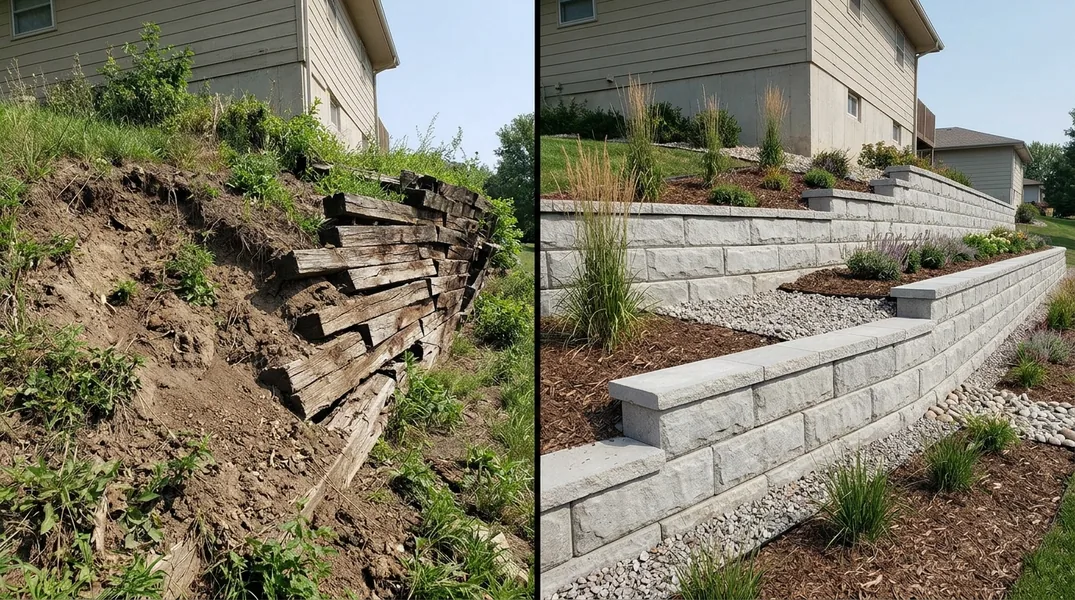
Why Lincoln Winters Are Hard on Retaining Walls
If you live in Lincoln, you already know that winter here is not gentle. Repeated freeze-thaw cycles, heavy snow loads, and saturated soil in early spring put enormous stress on any retaining wall. Water gets into tiny cracks, freezes, expands, and pushes the wall outward. When it thaws, the soil shifts again. Over a single season, that cycle can turn a solid wall into a leaning hazard.
Most homeowners do not inspect their walls until something looks obviously wrong. By then, the damage is often advanced and more expensive to fix. The good news is that retaining walls usually give warning signs before they fail completely. This article walks you through seven of the most common ones so you can act early and protect your property.
1. A Leaning Retaining Wall
A leaning retaining wall is one of the clearest signs of trouble. If the top of the wall is tipping away from the soil it holds back, the pressure behind it has become too great. This often happens when drainage is poor and water builds up in the backfill. In Lincoln, the spring melt can overload a wall that looked fine in November.
Small leans can sometimes be corrected with targeted Retaining Wall Repair, especially if the problem is caught early. A significant lean, however, usually means the wall needs more serious intervention. Do not wait until the wall is visibly tilting several inches, because at that point a collapse is a real risk.
2. Bowing or Bulging Sections
Bowing is different from leaning. Instead of the whole wall tipping, a section in the middle pushes outward like a belly. This is a classic sign of hydrostatic pressure, which is water trapped behind the wall. It is also common when the wall was built with too little drainage gravel or without weep holes.
If you see a bowing retaining wall, you need a bowing retaining wall fix sooner rather than later. In many cases, the solution involves relieving the pressure, improving drainage, and reinforcing or rebuilding the affected section. Ignoring a bulge only allows it to grow, and a bulging wall can fail suddenly under its own weight.
3. Cracks, Settling, and Frost Heave Damage
Cracks in the wall surface, especially horizontal cracks or stair-step cracks in block walls, are a red flag. They often indicate that the wall is settling unevenly or that the soil beneath it is moving. In cold climates, retaining wall frost heave is another major culprit. Frost heave happens when moisture in the soil freezes and lifts the ground, pushing against the wall and shifting its base.
Settling and frost heave often show up together. You might notice a section of the wall that has dropped slightly, or gaps opening between blocks. These are not cosmetic issues. They weaken the structure and let more water in, which accelerates the damage. A professional inspection can tell you whether the wall can be stabilized or should be replaced.
4. Poor Drainage and Water Pooling
Water is the number one enemy of any retaining wall. If you see pooling water at the base of the wall, soggy soil behind it, or water seeping through the face, the drainage system is failing. Weep holes may be clogged, or the wall may never have had proper drainage in the first place. In Lincoln, where spring snowmelt and heavy rain are common, this is a frequent problem.
Fixing drainage early is far cheaper than rebuilding a failed wall. A proper repair might involve clearing weep holes, adding gravel and filter fabric, or installing a French drain behind the wall. If the wall is otherwise sound, this kind of Retaining Wall Repair can add years to its life. If the wall is already compromised, replacement may be the smarter investment.
5. Shifting Blocks, Loose Caps, and Soil Movement
Retaining wall blocks should stay tightly fitted. If you can wiggle a block, see gaps opening, or notice that capstones are loose, the wall is moving. Soil movement behind the wall is often the cause. When the backfill shifts, the blocks lose support and begin to separate.
This is especially common in older walls that were built without modern reinforcement, such as geogrid. If your wall is showing these signs, it is worth having a professional assess whether it can be repaired or needs Retaining Wall Replacement. A new wall built with proper drainage and reinforcement will handle Lincoln's freeze-thaw cycles far better.
6. Sinkholes, Erosion, and Undermined Footings
Look at the ground in front of and behind the wall. Sinkholes, eroded areas, or soil that has washed away from the base are serious warning signs. When the footing is undermined, the wall loses its foundation and can collapse without much warning. This often happens after heavy rain or rapid snowmelt when water finds a path under the wall.
Erosion control is part of good wall design. If you are seeing these issues, do not try to patch them with a little extra dirt. The underlying water problem needs to be addressed. A professional can evaluate the footing and recommend the right fix, whether that is reinforcement, drainage work, or a full rebuild.
7. Rust, Rot, and Material Breakdown
Different wall materials fail in different ways. Wood retaining walls can rot, especially at the base where moisture lingers. Metal components can rust and weaken. Even concrete can spall or crack after repeated freezes. If you notice soft wood, rust stains, or crumbling concrete, the material is breaking down.
This is where choosing the right material matters. Concrete Retaining Walls are a durable option for Lincoln homeowners who want a long-lasting solution. If your current wall is showing material breakdown, it may be time to consider an upgrade rather than another round of repairs.
Retaining Wall Repair Near Me: When to Call a Pro in Lincoln
Some homeowners try to handle small wall issues themselves, and that is understandable. But retaining walls are structural. A mistake can lead to a collapse that damages property or injures someone. If you are seeing any of the seven signs above, especially leaning, bowing, or undermining, it is time to call a professional.
Lincoln Retaining Wall serves homeowners throughout Lincoln and nearby communities. Whether you need an inspection, a repair, or a full replacement, the team can help you understand your options. Call (531) 324-5728 or request a free estimate to get started. If you are also curious about pricing, the team can walk you through typical costs for your project.
Looking for a professional retaining wall contractor in Lincoln? Lincoln Retaining Wall responds fast for all your retaining wall needs.
Get a Free QuoteOur services: Retaining Wall Installation · Retaining Wall Repair · Retaining Wall Replacement